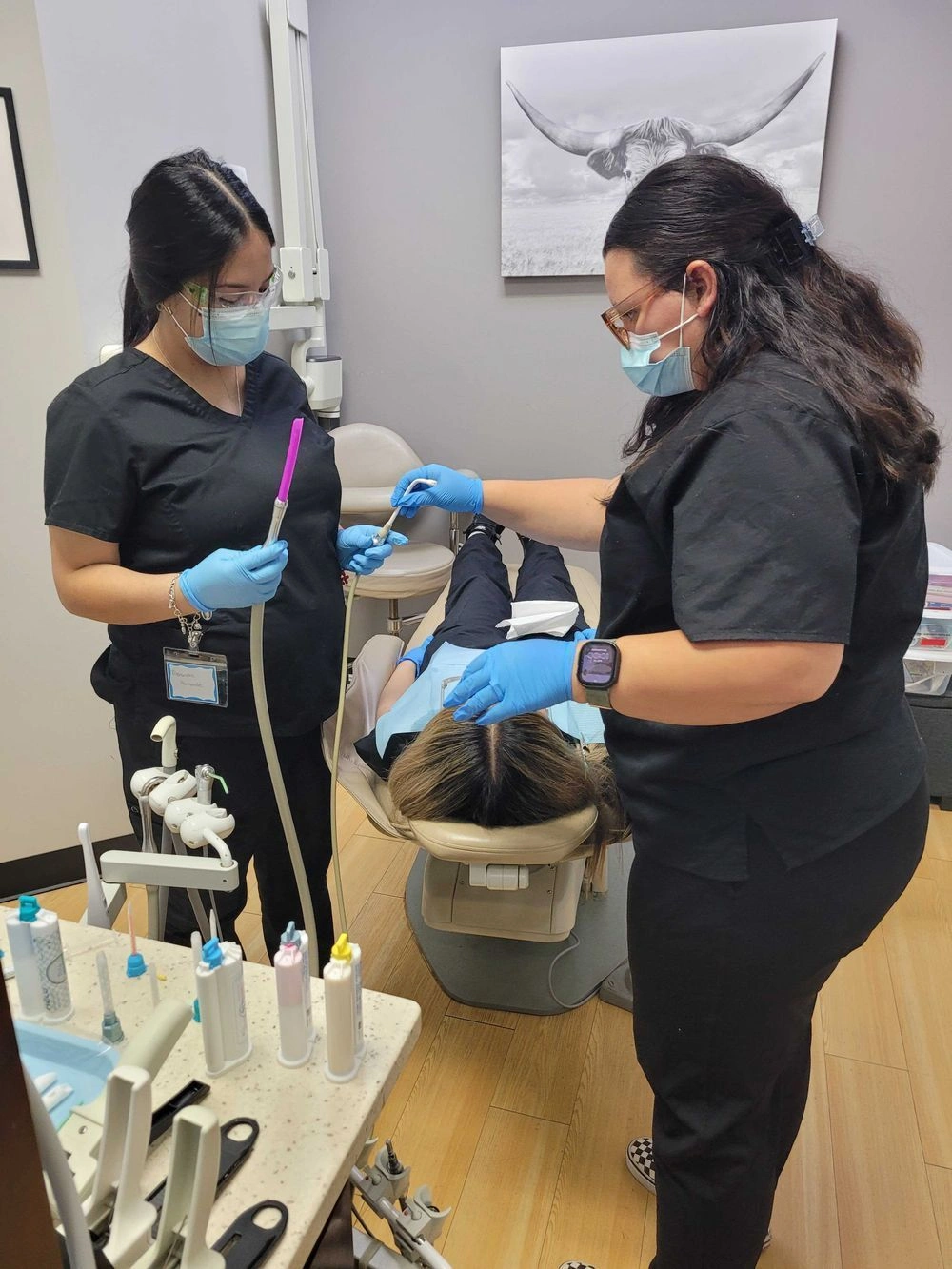
If you’re looking into becoming a dental assistant, you’ve probably come across a few different paths — community college programs, online courses, and vocational schools. Each has its place, but they’re built for different goals. This guide breaks down what a vocational school is, how it compares to other options, and whether it’s the right fit for someone starting a dental assisting career in Topeka.
What is a vocational school?
A vocational school — also called a trade school, career school, or technical school — is a training institution focused on preparing students for a specific career. Unlike a community college or university, a vocational school doesn’t require general education courses unrelated to your career goal. Everything in the curriculum is built around the job you’re training for.
For dental assisting, this means your entire program covers the skills dental offices actually need: chairside assisting, infection control, dental radiography, materials handling, patient communication, and administrative tasks. No English composition. No sociology. Just the training required to work.
How vocational training compares to other options
| |
Vocational School |
Community College |
University/4-Year |
| Program length |
8–16 weeks |
1–2 years |
2–4 years |
| Cost |
Lower |
Moderate |
Higher |
| Focus |
Career-specific only |
General + career |
General + degree |
| Clinical hours |
High (intensive) |
Moderate |
Varies |
| Time to employment |
2–4 months |
12–24 months |
24–48 months |
| Credential |
Certificate |
Certificate/Associate’s |
Degree |
For dental assisting specifically, employers are looking for hands-on skills and work ethic — not a four-year degree. A vocational certificate from a reputable program is a fully legitimate entry point into this career.
What you’ll learn in a vocational dental assistant program
A well-designed vocational school dental assistant program covers both the clinical and administrative sides of the job.
Clinical training
- Chairside assisting — instrument passing, suction, and four-handed dentistry technique used during procedures
- Dental radiography — taking, positioning, and evaluating X-rays safely and correctly
- Infection control — sterilization procedures, OSHA compliance, PPE use, and operatory disinfection
- Dental materials — impression materials, cements, composites, and temporary restorations
- Patient intake — medical history review, vital signs, and seating procedures
Administrative training
- Appointment scheduling and patient flow management
- Dental charting and clinical documentation
- Insurance verification and basic billing
- HIPAA compliance and patient privacy standards
- Electronic health records (EHR) systems
Professional skills
- Patient communication — especially with anxious patients
- Workplace professionalism and team dynamics
- Resume writing and interview preparation
Who vocational school is right for
Vocational training fits well if you:
- Want to start working in 3–4 months rather than 1–2 years
- Are changing careers and need to retrain efficiently
- Are a working adult or parent who needs a schedule that respects your time
- Can’t afford the time or cost of a multi-year program
- Have no prior dental experience — these programs are built for beginners
- Want focused, career-ready training without general education filler
It may not be the best fit if you:
- Want to become a dental hygienist (which requires an associate’s degree minimum)
- Are specifically seeking an academic credential from an accredited college
- Prefer a slower-paced, semester-based structure
What employers think about vocational training
Most dental offices hire based on skills, attitude, and certification — not on where you went to school. A dental assistant who completes a solid vocational program, passes the relevant credentialing exams, and shows up prepared to work is exactly what most practices need.
The Bureau of Labor Statistics projects dental assistant jobs to grow 7% through 2035, faster than the national average for all occupations. That demand means employers need trained workers — and vocational programs produce them efficiently.
Salary outlook after vocational training
According to the BLS, the national median salary for dental assistants is $48,070 per year (approximately $23.11 per hour). Entry-level positions typically start in the $32,000–$40,000 range, with experienced dental assistants in high-demand markets earning $55,000 or more.
Vocational training positions you to enter this salary range faster than longer programs — which means more cumulative income over your career.
What to look for in a vocational dental assistant school in Topeka
Not all vocational programs are the same. Before enrolling, evaluate these factors:
- Hands-on clinical training included — you should be practicing on real equipment and in real or simulated clinical settings, not just watching videos
- All-inclusive, transparent tuition — understand exactly what you’re paying before signing anything
- Flexible payment options — payment plans should be available so you’re not forced into large loans
- Certification or credentialing prep — the program should prepare you for the Registered Dental Assistant (RDA) exam or equivalent
- Career support — resume help, interview prep, and connections to local employers
- No unnecessary prerequisites — a good vocational program accepts students without prior dental experience
Get started at Topeka Dental Assistant School